When everything is going well, leadership is rarely questioned. But real leadership is revealed under pressure—during uncertainty, crisis, and rapid change.
From global disruptions like the pandemic to today’s high-speed digital economy, one thing has become clear:
👉 Organizations don’t fail because of strategy alone—they fail because of leadership integrity.
In 2026, employees are more aware, more vocal, and more value-driven than ever before. They don’t just follow authority—they follow authenticity.
Ethical leadership is no longer a “nice-to-have.”
It’s a core business advantage that drives trust, retention, and long-term success.
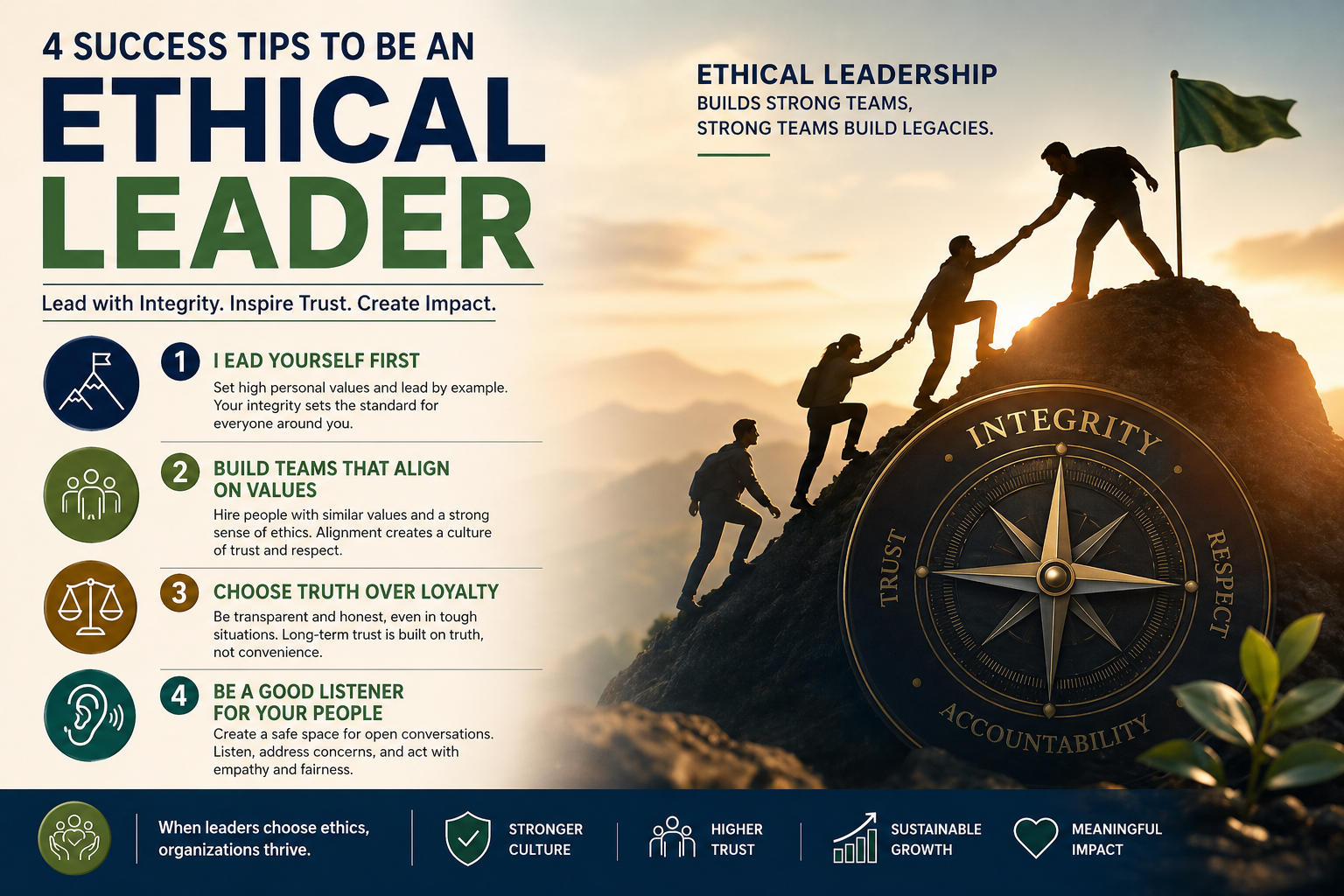
Here are 4 essential principles every modern leader must embrace 👇
🧭 1. Lead Yourself First — Values Before Vision
Ethical leadership begins within.
Before setting expectations for teams, leaders must build:
- Strong personal values
- Emotional discipline
- Decision-making integrity
In today’s fast-moving environment, not every situation comes with a rulebook. Leaders are often required to make decisions in ambiguity.
That’s where values act as a compass.
👉 When your team sees consistency between your words and actions, trust is built naturally.
👥 2. Build Teams That Align on Values, Not Just Skills
Hiring for skills alone is no longer enough.
High-performing organizations in 2026 focus on:
- Cultural alignment
- Ethical mindset
- Accountability
While skills can be trained, values are deeply ingrained.
A strong hiring process should ensure:
- Shared vision
- Mutual respect
- Long-term alignment
This creates a workplace where decisions are faster, conflicts are fewer, and collaboration is stronger.
⚖️ 3. Choose Transparency Over Convenience
Ethical leadership often requires making uncomfortable decisions.
There will be moments when:
- Shortcuts seem profitable
- Loyalty conflicts with truth
- Pressure challenges your principles
Modern leaders understand:
👉 Short-term gains from unethical decisions lead to long-term damage.
Transparency builds:
- Credibility
- Investor confidence
- Employee trust
In 2026, businesses that operate with honesty outperform those that rely on manipulation or hidden practices.
🎧 4. Create a Culture Where People Feel Safe to Speak
A truly ethical organization is not defined by policies—but by how safe people feel within it.
Leaders must actively create environments where:
- Employees can raise concerns without fear
- Feedback is welcomed, not punished
- Ethical issues are addressed, not ignored
In diverse and dynamic teams, conflicts are inevitable.
Ignoring them is costly.
👉 Listening is no longer a soft skill—it’s a leadership necessity.
When people feel heard, they:
- Contribute more
- Trust leadership
- Stay longer
⚠️ The Cost of Unethical Leadership (Why This Matters More Than Ever)
In today’s connected world, unethical behavior spreads fast—and damages faster.
It leads to:
- Loss of brand reputation
- Employee attrition
- Legal and financial risks
- Customer distrust
One wrong decision can undo years of growth.
🌱 Ethical Leadership = Sustainable Growth
Modern organizations are shifting from profit-only thinking to purpose-driven growth.
Ethical leaders:
- Build resilient teams
- Strengthen company culture
- Create long-term value
They don’t just lead businesses—they build legacies.
🚀 Final Thought
Leadership is not just about authority—it’s about responsibility.
When you choose to lead, you also choose:
- Accountability
- Transparency
- Integrity
And in 2026, those who lead with ethics don’t just survive—they stand out.
💼 About Montage Group
At Montage Group, we believe that true leadership goes beyond results.
We are committed to building an organization where people, processes, and performance grow together—driven by integrity and authenticity.
Because sustainable success is not built on shortcuts—it’s built on values.