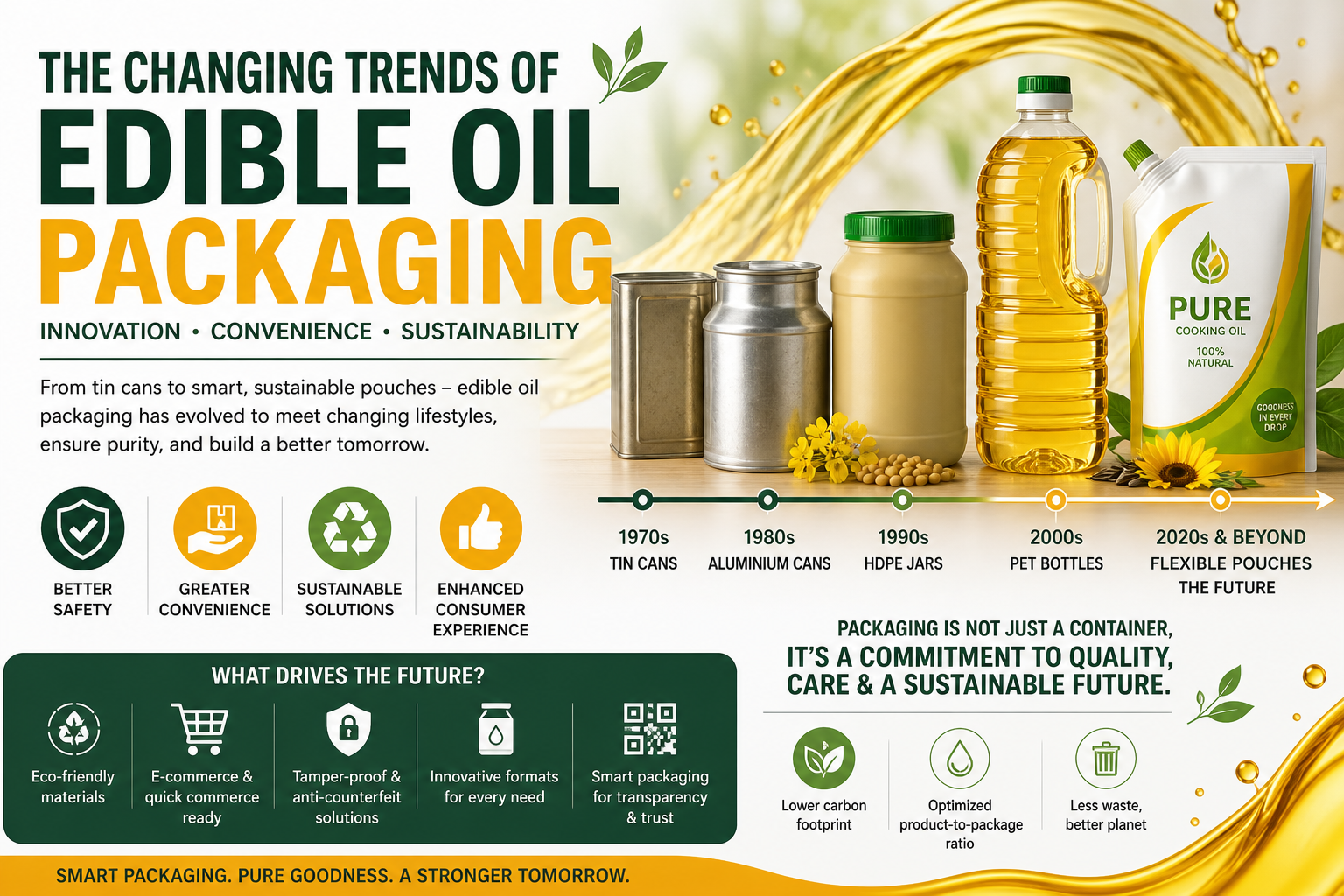
From bulky tin containers to smart, sustainable pouches, edible oil packaging has undergone a remarkable transformation over the decades. What was once purely functional has now become a powerful combination of convenience, safety, branding, and sustainability.
In 2026, packaging is no longer just about storing oil—it plays a critical role in influencing buying decisions, ensuring product integrity, and meeting evolving consumer expectations.
🛢️ From Bulk Storage to Smart Packaging
Traditionally, edible oil was sold in large tin containers or drums, catering to bigger families and bulk consumption patterns. Over time, as urbanization increased and lifestyles changed, so did packaging formats.
Today, the shift is clear:
- From 15L+ bulk tins → 1L, 5L, and even 500ml packs
- From metal containers → PET bottles and flexible pouches
- From utility-focused → convenience-driven packaging
This evolution reflects a deeper change in consumer behavior—smaller families, higher hygiene awareness, and preference for ease of use.
📦 Rise of PET Bottles and Flexible Packaging
The introduction of PET bottles revolutionized the edible oil market:
- Lightweight and easy to handle
- Transparent for product visibility
- Better sealing and reduced contamination
- Recyclable and cost-efficient
However, the real game-changer has been flexible packaging.
Flexible pouches have gained massive popularity due to:
- Lower cost and reduced material usage
- Easy storage and portability
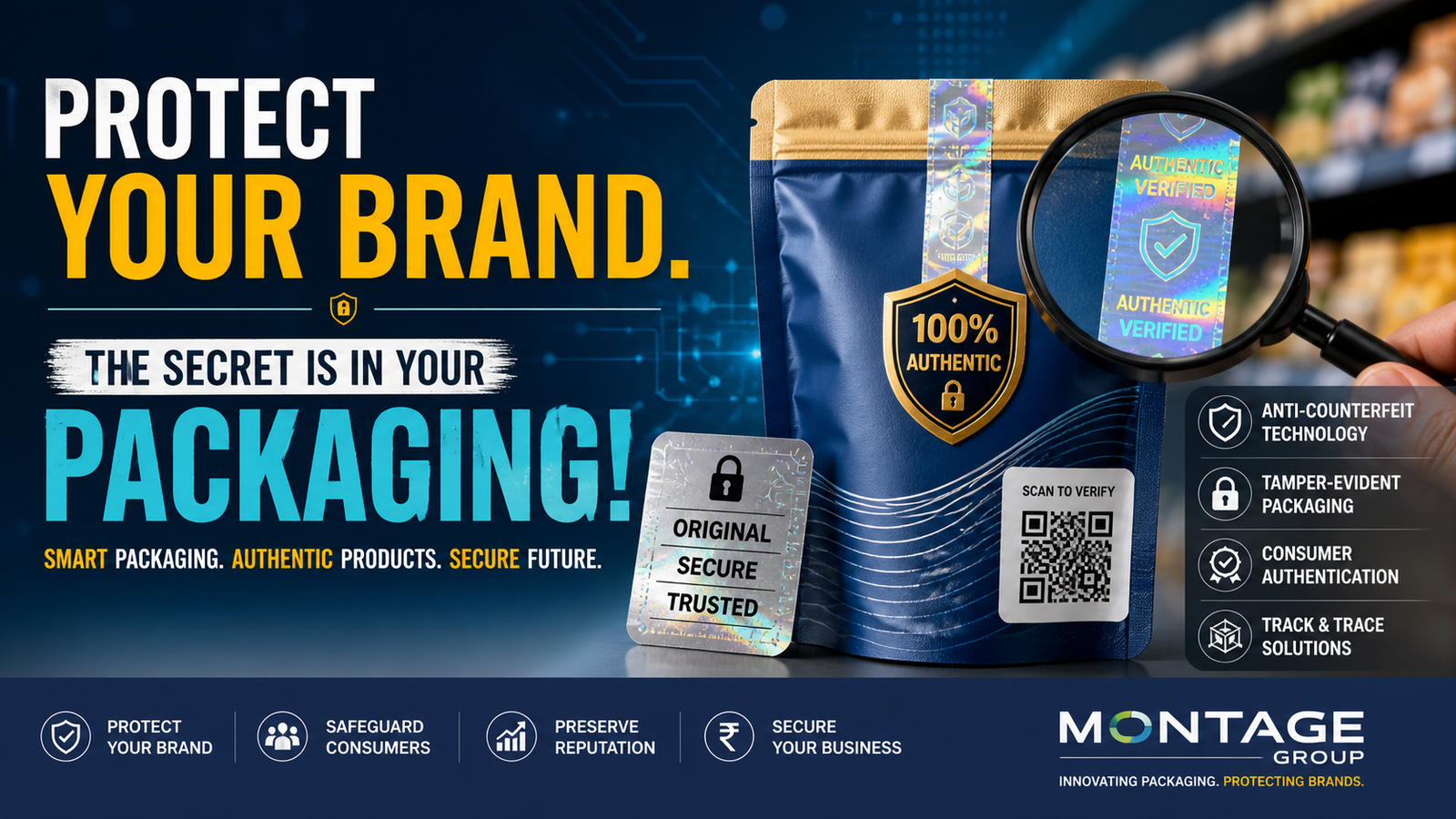
- Tamper-proof designs (holograms, seals)
- Improved shelf life and reduced oxidation
For modern consumers, especially in urban and semi-urban markets, pouches offer the perfect balance of affordability and convenience.
🌱 Sustainability is Driving Innovation
In 2026, sustainability is no longer optional—it’s a key business driver.
Edible oil brands are rapidly adopting:
- Recyclable mono-material pouches
- Reduced plastic usage in packaging
- Lightweight designs to lower carbon footprint
- Eco-friendly inks and labeling solutions
Packaging companies are now focusing on optimizing the product-to-package ratio, reducing waste, and improving lifecycle efficiency.
Consumers are also becoming more conscious, preferring brands that align with environmental responsibility.
🛒 E-commerce & Quick Commerce Impact
The rise of e-commerce and quick commerce has significantly influenced packaging design.
Today’s edible oil packaging must be:
- Leak-proof and durable for transit
- Compact and stackable
- Tamper-evident for safety assurance
- Visually appealing for digital shelves
Packaging is now designed not just for retail shelves—but also for online thumbnails and doorstep delivery.
🧠 Smart & Consumer-Centric Packaging
Innovation is moving beyond materials into smart usability:
- Easy-pour spouts and no-drip caps
- Re-sealable pouches for better storage
- Ergonomic handles for larger packs
- QR codes for product authenticity and traceability
Some brands are even experimenting with connected packaging, allowing consumers to access product details, recipes, and sourcing information digitally.
📊 Emerging Consumption Trends
Modern consumers are driving new packaging formats:
- Travel-size packs for convenience
- Meal-kit friendly oil sachets
- Trial/sample SKUs for new products
- Family-value packs for bulk buyers
The earlier “one-size-fits-all” approach has now evolved into segmented packaging strategies based on lifestyle and usage.
🔮 The Future of Edible Oil Packaging
The next phase of growth will be driven by:
- Sustainable innovations
- Smart packaging technology
- E-commerce optimization
- Hyper-personalized product formats
Packaging will continue to be a key differentiator—not just protecting the product, but enhancing the entire consumer experience.