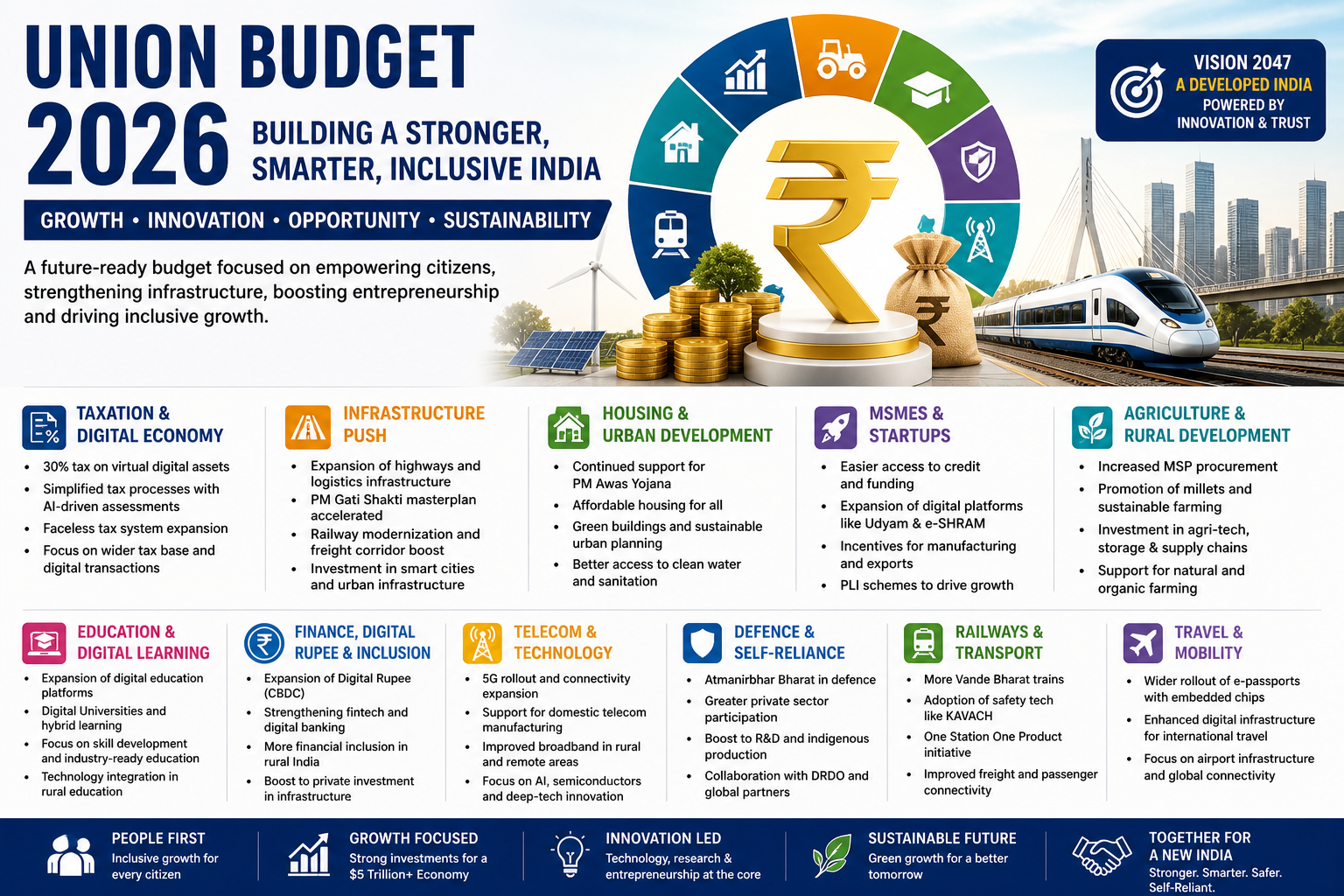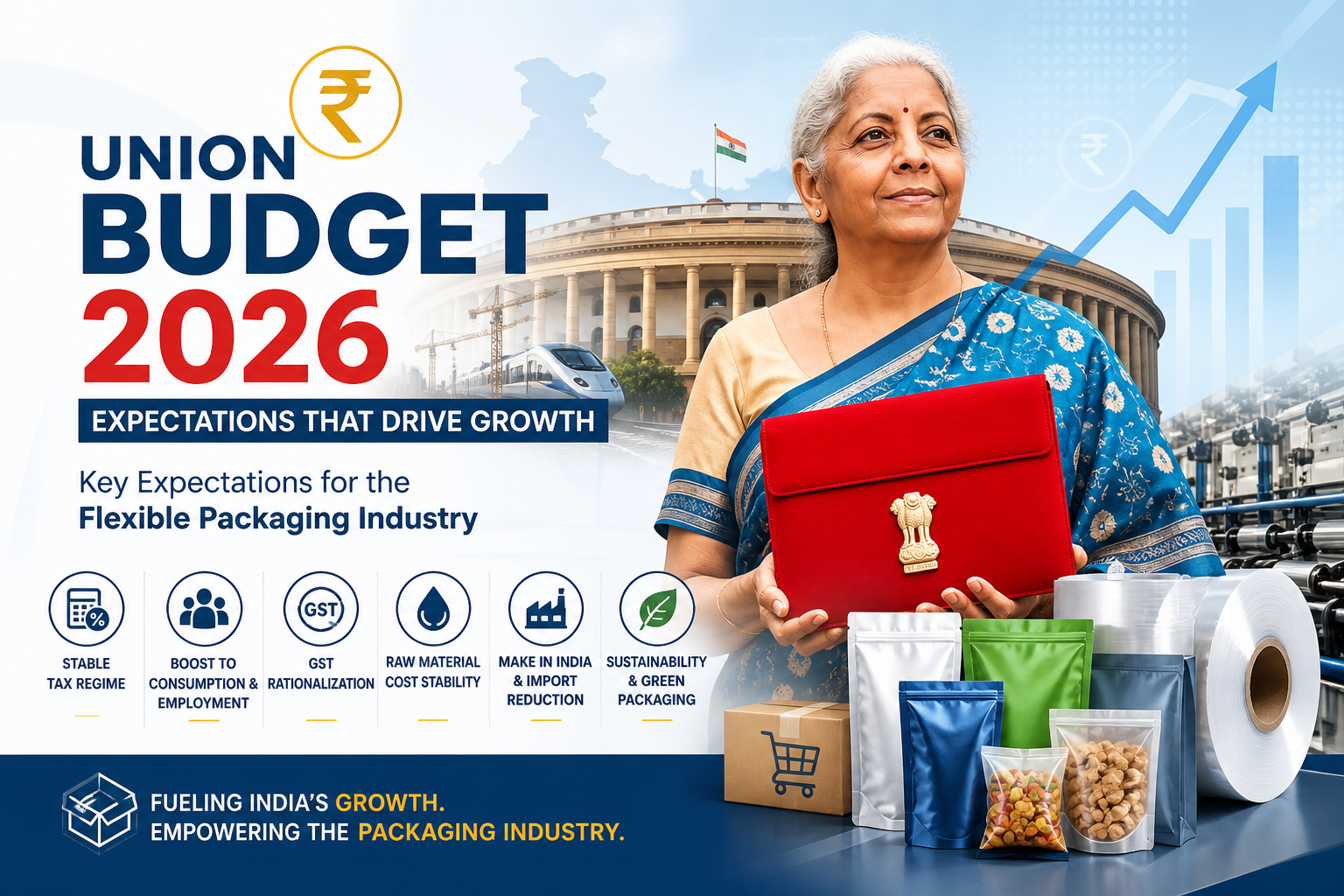
All eyes are now set on Nirmala Sitharaman as she prepares to unveil the Union Budget 2026–27, a crucial roadmap for sustaining India’s growth momentum.
After navigating the turbulence of the pandemic years, India’s economy has shown strong resilience. With GDP growth stabilizing in the 6–7% range and consumption gradually strengthening, the focus has now shifted from recovery to long-term expansion, sustainability, and global competitiveness.
As industries align with this next phase of growth, the packaging sector—especially flexible packaging—continues to play a vital role, being deeply linked with FMCG demand, e-commerce expansion, and retail consumption.
Here’s what the flexible packaging industry expects from Budget 2026:
1. Stable Tax Regime – No Sudden Policy Shocks
For industries that have only recently regained operational stability, policy consistency is critical.
Rather than introducing new tax burdens, the government is expected to:
- Maintain stable corporate tax rates
- Simplify compliance frameworks
- Ensure long-term policy clarity
A predictable tax environment will help both domestic and global investors continue investing in India’s manufacturing and packaging ecosystem.
2. Boost to Consumption & Employment
India’s growth story in 2026 still hinges on strong domestic consumption.
To accelerate this:
- Increased spending on infrastructure projects is expected
- Expansion of schemes like Mahatma Gandhi National Rural Employment Guarantee Act can drive rural income
- Tax reliefs or incentives for middle-income groups could increase disposable income
For the packaging industry, higher consumption directly translates into greater demand for FMCG products and packaging solutions.
3. GST Rationalization for FMCG & Logistics
The FMCG and logistics sectors continue to be the backbone of packaging demand.
Industry expectations include:
- Simplification and rationalization of GST slabs
- Reduction in GST on key raw materials used in packaging
- Faster input tax credit processing
These reforms would reduce operational costs and improve supply chain efficiency across the packaging value chain.
4. Raw Material Cost Stability (Oil & Polymers)
Flexible packaging is heavily dependent on petrochemical-based raw materials.
Fluctuations in crude oil prices directly impact production costs. Budget 2026 is expected to:
- Encourage domestic production of petrochemicals
- Introduce mechanisms to reduce price volatility
- Support alternative and sustainable material innovation
Stable input costs will help packaging companies maintain pricing and margins.
5. Push for ‘Make in India’ & Import Reduction
With global supply chains evolving, India has an opportunity to strengthen its manufacturing base.
The government is expected to:
- Promote local production of packaging raw materials
- Reduce dependency on imports
- Provide incentives for advanced manufacturing technologies
This aligns with the broader vision of self-reliance and export growth.
6. Sustainability & Green Packaging Initiatives
In 2026, sustainability is no longer optional—it’s a necessity.
The packaging industry is looking forward to:
- Incentives for recyclable and biodegradable packaging
- Support for circular economy initiatives
- Subsidies for adopting eco-friendly technologies
This will help companies transition toward green packaging solutions while staying compliant with evolving regulations.
Conclusion
The Union Budget 2026 is expected to play a defining role in shaping India’s next growth phase. For the flexible packaging industry, the focus remains clear—policy stability, consumption growth, cost control, and sustainability.
As the industry continues to evolve alongside FMCG and retail sectors, supportive budget measures can unlock significant opportunities and position India as a global leader in packaging innovation and manufacturing.